
The NC legislature passed a bill that will allow Duke Energy to bill ratepayers for power plants while they are being constructed, before they ever produce electricity. The same concept was used in South Carolina and Georgia, leading to huge cost overruns and higher bills for customers.
In South Carolina, a nuclear plant ran up $9 billion dollars in costs and was never completed! Ratepayers in South Carolina are still on the hook for these costs and will be paying for them for years to come. A SC Republican legislator and a former judge and SC utilities commissioner have urged North Carolina not to go down this path. Tom Erwin, the former SC judge and utilities commissioner described the law as a “blank check” to utilities.
In Georgia, similar legislation made ratepayers responsible for paying for construction and cost overruns. The two plants finally went online last year “about seven years behind schedule and $16 billion over budget.” Once again, ratepayers will be paying for this with higher rates for years.
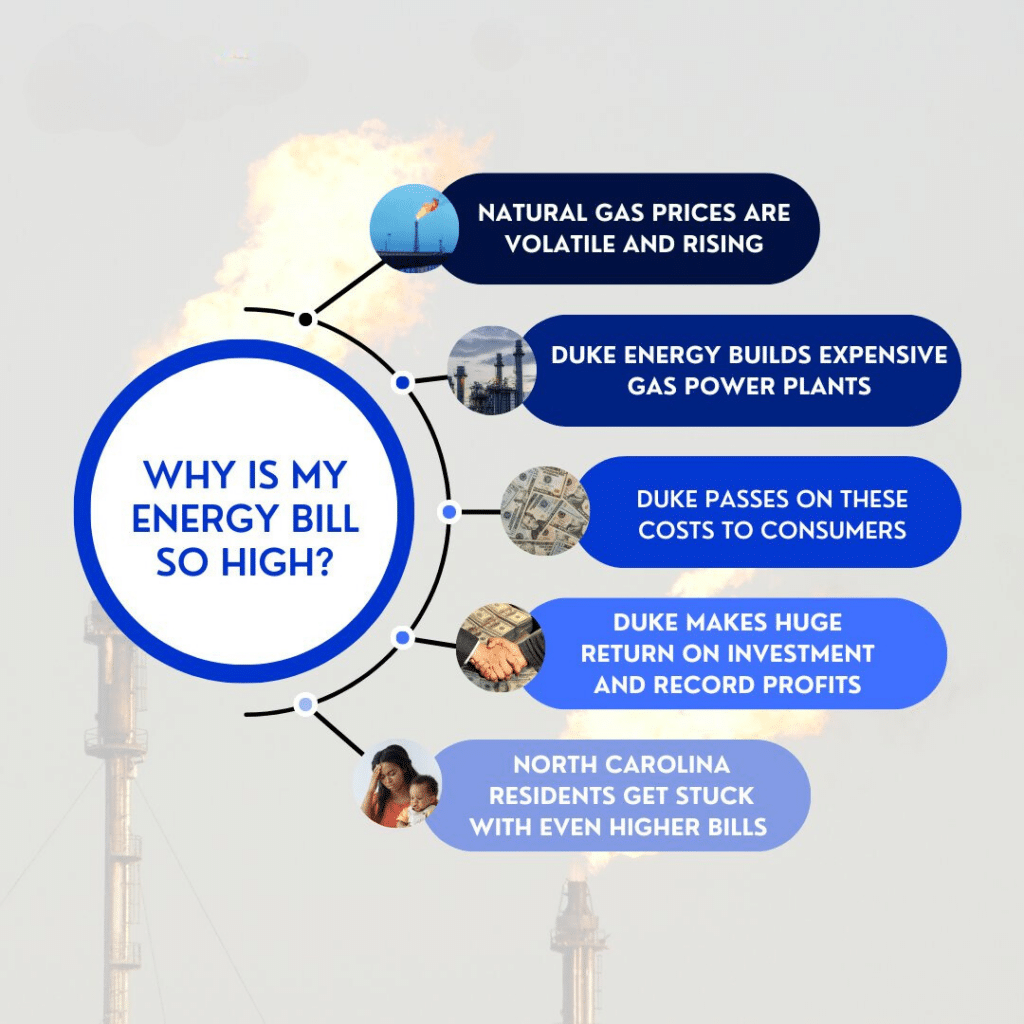
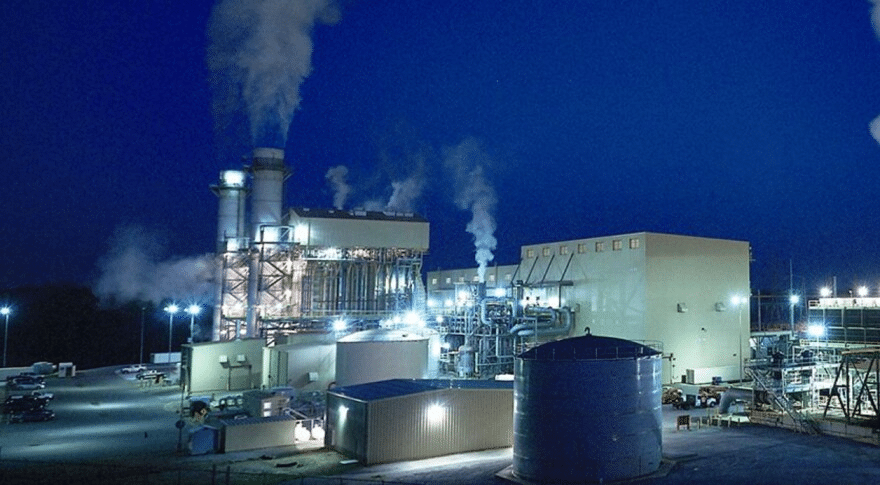
Duke isn’t currently planning to build nuclear plants in the near term. However, they have proposed multiple dirty methane gas plants. So North Carolinians will be subsidizing additional dirty gas, rather than clean, affordable renewable energy.
Our state had a plan: reduce greenhouse gas emissions 70% by 2030 and reach carbon neutrality by 2050, which would also keep energy bills from going through the roof. But greedy Duke Energy and other big-money polluters lobbied hard to tear that plan apart.
Governor Stein vetoed the bill that would have done just that, but the legislature overrode his veto.
This new law gutted our 2030 climate goal and will raise residential energy bills. An independent study found that eliminating the 2030 target could cost North Carolina ratepayers an extra $23 billion by 2050 in fuel expenses due to increased reliance on gas.
Higher energy bills. More pollution. That’s what happens when a greedy monopoly utility operates without appropriate oversight.
By law (HB 951), Duke Energy is required to put forward a carbon reduction plan every two years that provides the lowest cost and most reliable energy possible, while achieving a seventy percent (70%) reduction in emissions of carbon dioxide (CO2) emitted from electric generating facilities owned or operated by electric public utilities from 2005 levels by the year 2030 and carbon neutrality by the year 2050. With the passage of SB 266, the 2030 interim requirement is eliminated, though the 2050 requirement remains, along with other elements of the original law.

What is the lowest cost and most reliable way to meet the requirements of the law? More clean, renewable energy and battery storage.
A study Duke commissioned from the National Renewable Energy Laboratory revealed that Duke could most economically meet the carbon reduction targets mandated by the law by tripling the proposed solar on its grid by 2030.
Instead, Duke plans the largest buildout of dirty fossil gas in the nation1, along with incredibly expensive, unproven, small modular nuclear reactors2. Why?
REFERENCES